Clear, Black or Printed Stock Shrink Bands: Which to Buy?
The colour of a band changes four things: what the customer notices, what it hides, which sizes you can get, and whether it tears open cleanly.
 Lena Schmidt
In this guide
- What is actually on the shelf?
- How do the three compare at a glance?
- When is clear the right choice?
- When is black worth the extra?
- When does stock print make sense?
- Does colour change how the band behaves?
- What about the tear strip colour?
- Three examples
- Can you use colour to tell variants apart?
- Which should you buy?
- A two-bag test
- Where to buy the bands
- Questions to ask the seller
- FAQ
- References
Quick answer. Clear bands are the default: the widest size range, the lowest price and usually a perforation. Black bands hide the cap edge, the fill line and small flaws, cost about a fifth more in one large catalogue, come in fewer sizes and are often sold without a perforation. Stock printed bands, with wording such as “Sealed for Your Protection”, are the easiest for a shopper to notice, but anyone can buy the same print. Choose clear for most products, black when the neck needs tidying up, and stock print when you want the seal to be seen. None of the three is unique to your brand.
What is actually on the shelf?
-
Clear. Uline describes its standard range as clear 200 gauge PVC, offered perforated or non-perforated [1]. Sizes in that one catalogue run from 30 mm to 235 mm lay-flat.
-
Black. The same seller has a separate black range, also 200 gauge PVC, which it says adds a professional touch to bottles and jars [2]. Other distributors list black bands for common cap sizes [3][4][5].
-
Other solid colours. Less common. One specialist sells a green preform band for deli containers [6].
-
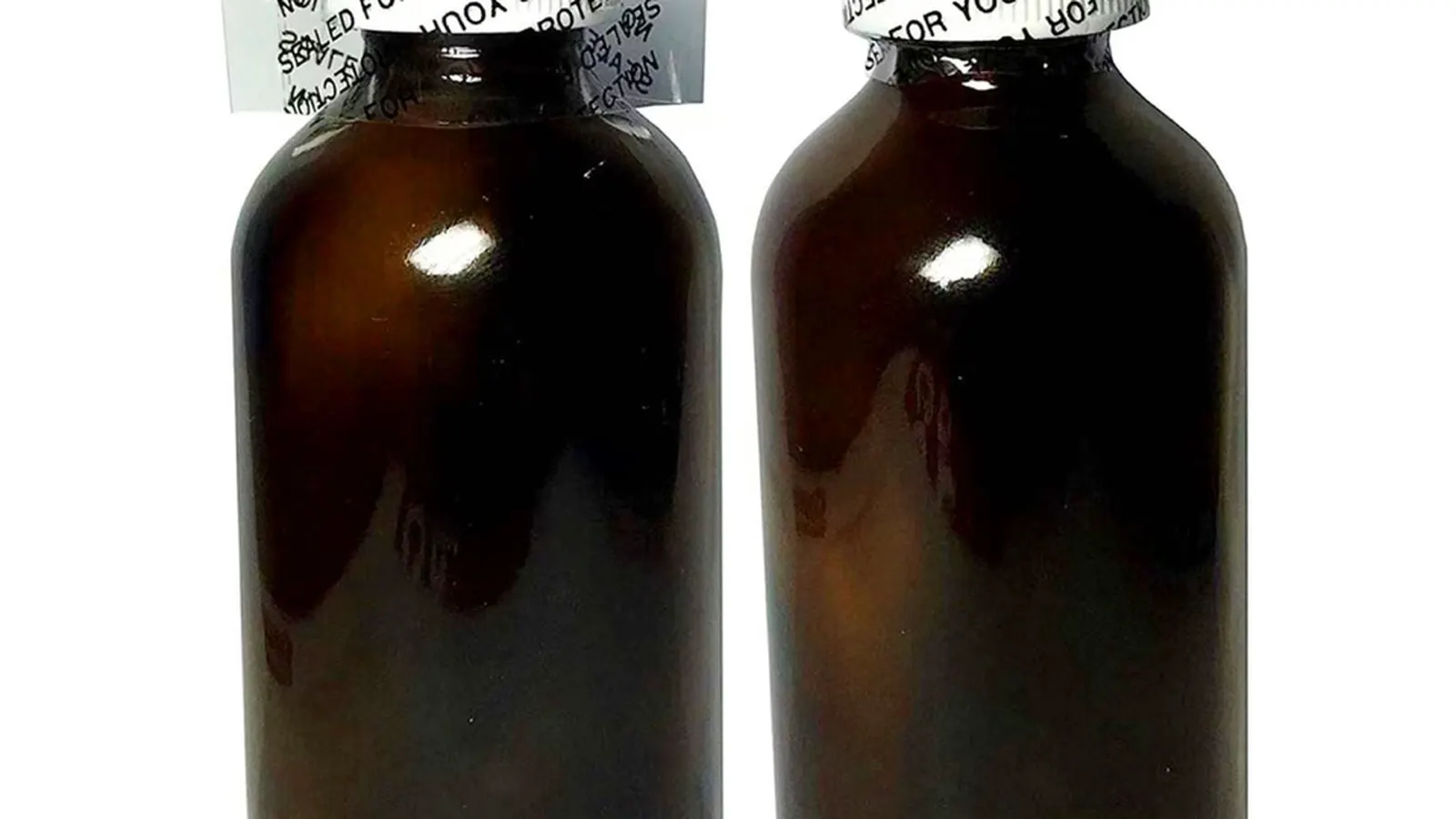
Stock print. Bands pre-printed with a generic message. A food-service supplier sells 38 mm bands “with tamper message” [3], and marketplace sleeves for deli tubs carry red text such as “Sealed for Your Protection” or “Quality Sealed” [7].
Shrink capsules for bottles follow the same pattern with more colour. One supplier lists capsules in matte black or transparent, with a gold tear strip on the closed-top version [8].
How do the three compare at a glance?
| Clear | Black | Stock print | |
|---|---|---|---|
| Size range | Widest [1] | Narrower; six sizes in one catalogue [2] | Few; tied to popular containers [3][7] |
| Perforation | Commonly offered [1] | Often non-perforated; check each listing [2][3] | Non-perforated in the listings we found [3] |
| Price | Lowest | A few dollars more per 1,000 [2] | Slightly above plain [3] |
| What the buyer sees | The cap and neck, through film | A solid collar | A message |
| Unique to you? | No | No | No |
When is clear the right choice?
Most of the time. Clear film lets the customer see the cap, the neck and, on glass, the product. If your cap is a feature, such as a gold lid on a honey jar or a coloured dropper, a clear band leaves it on show.
Clear is also where the choice is. In the catalogue above, clear perforated bands are listed in a long run of widths from 30 mm to 235 mm, and in two heights [1]. If your container is unusual, clear may be the only stock option that fits.
Its weakness is the same as its strength. Clear film on a clear bottle is easy to miss. A shopper who is not looking for a seal may not register that one is there, and a band that goes unnoticed does less as a signal. That is an observation, not a measured finding. If visibility is the goal, read on.
When is black worth the extra?
Black is a cosmetic tool first. It covers the lower edge of the cap, the thread, the fill line and the small gap that often shows beneath a lid. One distributor sells a 70 x 50 mm black band specifically for 38 mm caps on bottles with longer necks [5], which is the situation where there is the most neck to tidy.
It suits dark caps and dark glass. A black band under a black cap reads as one continuous closure. Under a white or metal cap it becomes a stripe, which may or may not be what you want.
Three practical points come with it.
Fewer sizes. One large catalogue lists black bands in six widths, from 48 mm to 100 mm, all 28 mm tall [2]. Its clear range goes far wider. If your lid is above about 2.5 inches, you may not find stock black at all from that seller.
Often no perforation. Every black band in that catalogue is non-perforated [2]. A food-service supplier offers black 38 mm bands both ways [3], and two distributors sell black bands with a single or double vertical perforation [4][5]. So a perforated black band exists, but you cannot assume it. Read the listing for the word.
A modest premium. In the catalogue that sells both, a 55 x 28 mm band is $16 per thousand in clear perforated and $19 in black non-perforated [1][2]. That is three dollars, or about 19 percent, and in this case the dearer band is also the one without a tear line.
One more thing to weigh. A black band hides what is under it, which includes evidence. If a cap has been backed off and retightened, a clear band may show a gap or a twist in the film that a black band conceals. The sources reviewed show no source that tests this, so treat it as a caution to check on your own samples: band a bottle, loosen the cap as far as the film allows, and see what is visible.
When does stock print make sense?
When you want the seal to announce itself. Red lettering that says the product is sealed is hard to overlook, and it tells an unfamiliar customer what the film is for. Deli counters and food stalls use these because buyers there are used to lifting lids [7].
The limits are plain.
-
It is not your brand. The wording is generic, and the same sleeve is on sale to anyone.
-
Sizes are few. The sources reviewed show stock print for 38 mm caps and for deli tubs [3][7], not across the size range.
-
It may not be perforated. The 38 mm tamper-message bands the sources reviewed show are sold as non-perforated [3].
-
The price difference is small. A bag of 250 printed 66 x 50 mm bands was $8.59, against $7.99 for a bag of clear perforated 66 x 25 mm bands from the same seller [3]. The heights differ, so this is a rough comparison only.
For a product where tamper evidence is a legal requirement, generic print is unlikely to be enough. The US rule for over-the-counter drugs asks for a feature that is distinctive by design, or that carries an identifying characteristic such as a name, logo or pattern, and it defines “distinctive by design” as something that cannot be duplicated with commonly available materials [9]. A message anyone can buy off the shelf sits awkwardly with that. Most foods and cosmetics are outside the rule; see are shrink bands required by law.
Does colour change how the band behaves?
Not in any way the listings describe. Clear and black bands in the catalogues above are the same film at the same thickness, 200 gauge PVC [1][2], and distributors give the same instructions for both: slide the band over the capped container and heat it with a hair dryer or heat gun [4].
Two differences show up after shrinking, and both are observations to verify on samples. Wrinkles and seams catch the light on a glossy black surface, so an uneven shrink is more visible on black than on clear. And a perforation line is easier for a customer to find on black or printed film than on clear, because the row of holes shows against the colour.
Nothing here was find supplier information on whether black film affects recycling or sorting. Our page [are shrink bands recyclable] covers what suppliers say about band film in general.
What about the tear strip colour?
A small detail that helps. Some bands and capsules mark the opening point in a contrasting colour: a gold tear strip on a black capsule [8], or, in one UK seller’s range, a red string along the tear line of a clear band [10]. The customer sees where to pull. If you choose black and want it to open easily, a contrasting strip is worth asking for. More on opening features in the shrink band perforation guide.
Three examples
Hot sauce in clear glass with a red cap. The cap is part of the look and the sauce colour sells the bottle. A clear perforated band keeps both visible. If the neck shows an untidy fill line, a taller clear band will not hide it, and that is the point at which black starts to earn its place.
Beard oil in amber glass with a black dropper. A black band under a black collar disappears into the closure and makes the bottle look finished. Find a perforated one, or one with a contrasting tear strip, because a customer with oily fingers will not thank you for a band that needs scissors.
Hummus in a clear tub at a market stall. Clear film on a clear tub is close to invisible. A stock band with red wording, or a solid colour, shows from arm’s length that the lid has not been lifted. Our page on shrink bands for deli containers covers the sizes.
The products are illustrations. The reasoning is ours.
Can you use colour to tell variants apart?
Yes, within the limits of stock. If two products share a bottle and differ only in what is inside, a clear band on one and a black band on the other gives staff and customers a quick cue, at the cost of holding two bags instead of one. Shrink capsules are sold in a wider choice of colours, as the listings in [shrink capsules for wine bottles] show, and suit this better. With bands, stock colours are too few to code a large range. Past two variants, a label does the job better.
Which should you buy?
-
First order, any product: clear, perforated. It fits, it opens and it costs least.
-
Dark glass with a dark cap, or a long bare neck: black, in a perforated version if you can find one.
-
Clear tub on a self-service counter: stock print or a solid colour, so the seal is noticed.
-
Cap that is part of your look: clear.
-
Product that legally needs a distinctive tamper-evident feature: none of these. Go to custom print.
-
Unusual size: clear, because that is where stock sizes exist.
These are recommendations drawn from the catalogue facts above. They are not a supplier’s rule.
A two-bag test
If you are undecided between clear and black, the test is cheap, since a bag of 250 runs to a few dollars [3].
-
Buy one bag of each in your size.
-
Band six units of each and stand them on a shelf with your usual lighting.
-
Ask three people who have not seen the product to pick one up and open it. Note whether they notice the band before they try the cap, and how they get it off.
-
Photograph the two side by side. Look at them again the next day.
-
Loosen one cap of each as far as the film allows, and compare what shows.
The answer is usually obvious once the bottles are in front of you. The test is a suggestion, not a standard method.
Where to buy the bands
The listing below is the clear baseline this page keeps coming back to: plain PVC, perforated, cut to size.
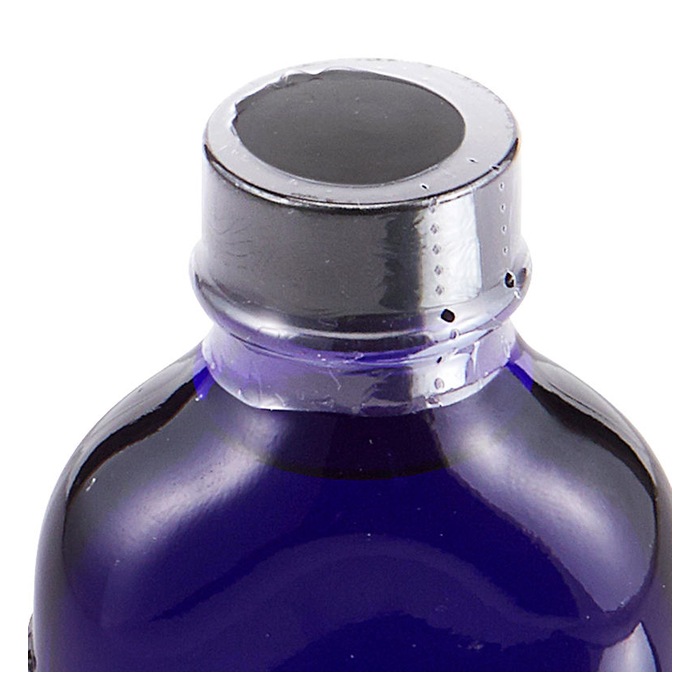
Clear perforated PVC shrink bands, cut to size
Plain clear PVC bands with a perforation line, sold from 1,000 pieces with width and height set to your closure.
- Role: Alibaba sourcing candidate
- Clear PVC
- Perforated
- Cut to size
- MOQ: From 1,000 pieces
Questions to ask the seller
-
Is this band perforated, and in which direction?
-
Is the black or printed version the same film and thickness as the clear one?
-
Which sizes are stocked in this colour?
-
For printed bands: what exactly does the print say, in what colour, and where does it sit after shrinking?
-
Can I buy a small pack before a carton? One distributor does not accept returns on shrink bands [4].
FAQ
Are black bands thicker or stronger?
Not in the listings the sources read. Both are 200 gauge PVC [1][2].
Do coloured bands cost much more?
In one catalogue, about three dollars more per thousand at the same size [1][2].
Is a printed “sealed” band tamper-proof?
No band is tamper-proof. A band shows opening. Stock print makes the band more noticeable and no harder to copy.
Can I get white, gold or red bands from stock?
The sources reviewed show black widely, green from one specialist [6], and many colours in wine-style capsules. Other solid colours in band form are usually a custom order.
Should the band match the cap?
There is no rule. Matching makes the closure look like one piece. Contrast makes the seal visible.
References
- Uline, Clear Shrink Bands, perforated and non-perforated ranges with size and price tables. uline.com (retail catalogue; prices as displayed).
- Uline, Black Shrink Bands, non-perforated range (48 to 100 mm x 28 mm) with price table. uline.com.
- WebstaurantStore, shrink bands for 38 mm caps in clear, black and tamper-message versions. webstaurantstore.com (food-service supplier; prices as displayed).
- TricorBraun, 66 mm x 56 mm Black PVC Pre-Cut Shrink Band with Single Vertical Perforation; Berlin Packaging, 38 mm Black PVC 1 in Shrink Bands. tricorbraun.com, berlinpackaging.com (packaging distributors).
- The Cary Company, 38mm 70 x 50 Black Perforated Shrink Band. thecarycompany.com (packaging distributor).
- The Brenmar Company, Green Shrink Band for Deli Container 4.5 in Preform. brenmarco.com (packaging supplier).
- Marketplace listings for deli container shrink bands with red stock print, on Walmart Marketplace. walmart.com (seller text).
- Creopack, shrink capsule product pages (matte black and transparent; gold tear strip). creopack.se (packaging supplier).
- Legal Information Institute (Cornell), 21 CFR 211.132, Tamper-evident packaging requirements for OTC human drug products. law.cornell.edu (copy of the regulation).
- ShrinkBands.co.uk, bottle cap clear shrink bands category (38 mm band with red string at tear strip). shrinkbands.co.uk (UK shrink band retailer).
Continue reading

Foamer Pumps: Dilution, Viscosity and Bottle Fit Guide
A foamer pump does not make foam from a thick liquid. It mixes air into a thin one, and the dilution is decided before the pump is ever fitted.

Shrink Bands vs Tamper-Evident Caps: Which Costs Less?
A band costs a cent or two and a tamper-evident closure costs five. The minimum order is what usually decides it, not the unit price.
Shrink Bands vs Shrink Wrap Bags: Which Should You Use?
A band is an open tube and a bag is a closed one. Most of the decision follows from that, and so does the equipment you need.