Cello Cookie Bags: OPP vs Cellulose, Thickness and Seals
Cello is a trade word now, not a material. Most bags sold as cello are OPP, which is clear and cheap but does not compost, and the compostable ones are a different film at a different price.
 Lena Schmidt
In this guide
- What “cello” means in practice
- The two film families side by side
- Thickness: mil, microns and what you are paying for
- Closures: flap, heat seal or sticker
- Do the films breathe? The sources disagree
- Compostable claims: film versus finished bag
- What the bags cost
- Where to buy the bags
- Picking a size
- Which bag for which situation
- A bench test for your cookies
- Questions to ask the supplier
- Common mistakes
- FAQ
- References
Quick answer. Most inexpensive clear “cello” bags sold for cookies are not cellophane at all. One Australian supplier says plainly that its cello is BOPP, a polypropylene plastic, and several marketplace listings describe the same kind of bag as “extruded plastic film”. True cellulose bags exist too, usually sold under the NatureFlex film name, and they cost more. Check three things before buying: the film material, the thickness in mil with the glue flap excluded or included, and the closure (self-adhesive flap, heat seal or sticker). Then run a short bench test with your own cookies, because sellers disagree about how well each film holds out air and moisture.
What “cello” means in practice
The word comes from cellophane, a film made from wood cellulose. Today it is also the trade name for a much cheaper plastic. Koch, an Australian packaging supplier, says its cello is technically BOPP, biaxially oriented polypropylene, which is a plastic [2]. Walmart marketplace listings show the same habit: a 6 by 9 inch “cellophane” self-seal bag is listed at 2 mil [4], and another seller of “cello” bags describes its product as extruded plastic film [3]. A bakery supply blog, Miss Cookie Packaging, draws the line the other way round and treats poly (polypropylene) and cello (cellophane) as different products with different behaviour [1].
So when a listing says cello, read the material line. If it says OPP, BOPP, CPP or polypropylene, you are buying plastic film that happens to be glossy and clear. If it says NatureFlex, cellulose or compostable, you are buying the other kind. If it says only “cellophane”, ask. The reading here: most of the cheap self-seal bags are in the first group, but none of them were tested here.
The two film families side by side
| OPP / BOPP “cello” | Cellulose (NatureFlex type) | |
|---|---|---|
| Material | Polypropylene plastic [2] | Wood-pulp cellulose film; Futamura says certified for home and industrial composting [7] |
| Typical closure | Self-adhesive flap, or heat seal for back-weld bags [3][6] | Heat or impulse seal, or a sticker [8][9] |
| Air and moisture | Described as airtight if heat sealed, traps moisture inside [1] | One blog calls cello breathable [1]; a seller says high oxygen barrier [8] |
| Strength | Flexible and tear resistant [1] | Thin and more prone to tearing [1] |
| Cost | Generally cheaper [1] | More expensive [1] |
Each cell is one seller or maker’s statement. The two sources disagree on cellulose barrier; see the breathability section.
Thickness: mil, microns and what you are paying for
Mil is one thousandth of an inch. Plymor puts 1.25 mil at 0.00125 inch and calls it slightly thinner than a standard sandwich bag [5]. In microns, the arithmetic here gives about 30 microns for 1.2 mil, 36 for 1.4, 41 for 1.6 and 51 for 2.0, using 25.4 microns per mil.
Listings in this class cluster between 1.2 and 2 mil. Interplas lists its 8 by 10 inch back-weld cello bag at 1.2 mil [6]. A 888 Display USA listing gives 1.4 mil for an 8 by 10 inch self-seal bag and 1.6 mil for a 4 by 6 [3]. Another listing sells a 6 by 9 inch bag at 2 mil and states that the size excludes the glue flap [4]. The compostable NatureFlex bags come at 1.2 mil and at what Nashville Wraps calls heavy weight 1.6 mil [8].
| Listing | Thickness | Note |
|---|---|---|
| Interplas 8 x 10 back-weld cello [6] | 1.2 mil | Heat-sealed seam |
| 888 Display USA 8 x 10 self-seal [3] | 1.4 mil | 100 per pack |
| 888 Display USA 4 x 6 self-seal [3] | 1.6 mil | 200 per pack |
| Marketplace 6 x 9 self-seal [4] | 2 mil | Size excludes glue flap |
| Nashville Wraps NatureFlex 3.5 x 5.5 [8] | 1.6 mil | Compostable film, heat sealable |
Seller statements, not measurements. A listing that says 2 mil in its title but 1.4 mil in its specifications has been seen on the same product page [4], so read the specification line.
Thicker is not automatically better for a cookie. Extra film adds cost and stiffness but does little for sharp edges. What matters more is that the bag does not tear when a cookie corner pushes on it and that the seal holds when stacked in a box. The only way to find out is to pack a few and carry them.
Closures: flap, heat seal or sticker
Self-seal bags have an adhesive strip on a flap, which the listings usually exclude from the stated size [4][10]. They are quick for hand packing and need no equipment. Several listings call them resealable, but the glue is a convenience feature and sellers do not claim an airtight seal from it.
Miss Cookie Packaging argues for heat-sealing poly bags with an impulse sealer instead of adhesives or twist ties, because a sealed poly bag is airtight [1]. That is one baker’s position. Interplas points buyers to a cellophane heat sealer for sealing food bags [6], and Good Start Packaging says its cellulose bags can be sealed with heat or an electric pulse sealer, or closed with a sticker [9]. For how a small impulse sealer behaves on thin film, see the [impulse sealer page].
Nashville Wraps and Good Start describe the cellulose bags as heat sealable [8][9], but film grades differ. Futamura makes heat-seal and non-heat-seal NatureFlex films [7], so a bag sold without a sealing statement may not take a heat seal. Ask before you buy a sealer for them.
Do the films breathe? The sources disagree
Miss Cookie Packaging says poly keeps cookies fresh longer because it is not air-permeable, and that cello lets air through, which can shorten shelf life [1]. The same post warns that poly traps moisture, so underbaked cookies or icing that is not fully dry may smear, while cello lets outside moisture in, which can also cause bleed [1]. It cites Primera advising against cello bags for cookies printed with its Eddie printer because they let in air and humidity [1].
Nashville Wraps takes a different line on its cellulose bags: it describes them as having high oxygen barrier properties and as keeping cookies and trail mix fresh [8]. Futamura likewise lists high oxygen and gas barrier among NatureFlex properties, with a range of moisture barriers depending on grade [7]. Good Start calls cellulose film moisture and oil resistant [9], and gives no shelf life figure.
These claims can all be true for different films. A cellulose grade made for snacks is not the same product as a thin generic cello. The reading here is that “cello” breathability depends on the specific film and thickness, and that you cannot settle it from a blog. Run the bench test below with the exact bag you plan to buy.
Compostable claims: film versus finished bag
Good Start states that its film, NatureFlex NK made by Futamura, is certified compostable by BPI and TÜV, but the finished bags are not certified, because certification does not cover post-production processes [9]. Its bags carry no print, stickers or labels, which it says leaves the film essentially unchanged [9]. It also says cellulose packaging composts in roughly 60 to 120 days depending on conditions [9]. Nashville Wraps says in a home composting environment its bags typically break down in a few weeks, and that they meet ASTM D6400 and EN 13432 [8]. The two timescales differ and neither is a test run here.
The practical point for a brand: do not print “home compostable” on your label because the film maker says so. Ask the supplier what the certificate covers, and whether your printed sticker or label changes it. Nothing here was research the labelling rules for compostability claims; check them with your local authority or a food-packaging adviser before printing.
Print and labelling deserve a thought too. A sticker over the flap or a label on the front is how many bakeries add the product name and ingredients; Good Start notes that its unprinted bags are left essentially unchanged by the absence of print, and that printing or labelling is what a bag certification would involve [9]. If you rely on a compostable claim, keep that in mind when choosing between a printed bag and a plain bag with a label. Check your local rules on food labelling before you print; nothing here was research them for this page.
What the bags cost
| Listing | Price shown | Per bag (our arithmetic) |
|---|---|---|
| 888 Display USA 4 x 6, 200 pack [3] | $10.92 | about 5.5 cents |
| 888 Display USA 8 x 10, 100 pack [3] | $9.78 | about 9.8 cents |
| Nashville Wraps NatureFlex 3.5 x 5.5, 100 pack (Zoro) [11] | $19.49 | about 19 cents |
| Nashville Wraps NatureFlex 7 x 15, 100 pack (Zoro) [11] | $46.15 | about 46 cents |
Prices as displayed in search results on the day of checking, unverified; sizes differ between rows, so they are not like for like.
In these listings the plastic bags show fewer cents per bag than the cellulose bags, though the sizes differ, so the comparison is only indicative. For a cookie that sells for several dollars the bag is a small line, but a thousand-bag order of the compostable kind is a real purchase, so order a sample first.
Where to buy the bags
The listing below is the everyday bag: a clear OPP cookie bag with a self-seal strip, sold in packs of 100.
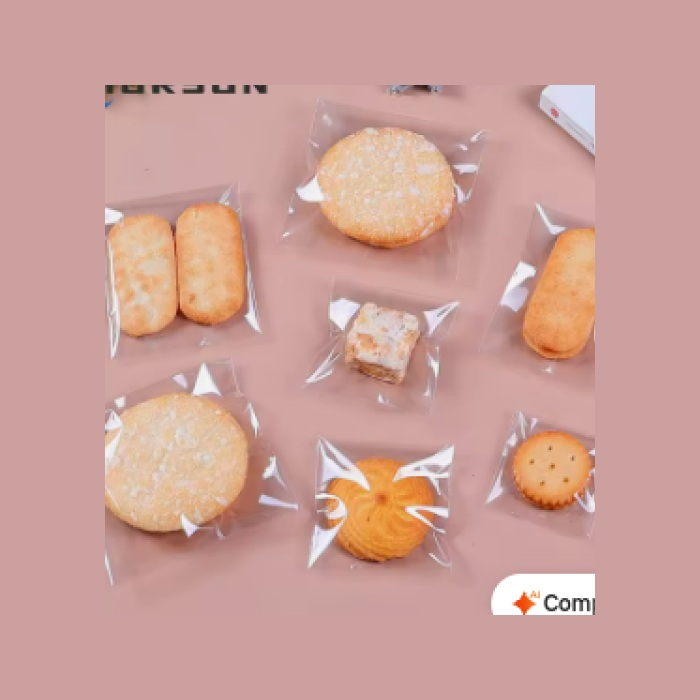
Clear OPP cookie bags, self-seal
A clear OPP bag with a self-adhesive strip and no heat sealing needed, sold in packs of 100.
- Role: Alibaba sourcing candidate
- OPP film
- Self-seal strip
- Pack of 100
- MOQ: From 1 pack
Picking a size
Both listing types state a bag size and usually exclude the glue flap [4][10]. That means a 4 by 6 inch bag has a 4 by 6 inch pocket plus a flap on top. Our untested rule of thumb: measure your widest cookie, add about a centimetre on each side so the bag does not pinch it, and add room at the top to fold or seal. Round cookies are easy; a cookie with a piped edge or a tall decoration needs the bag chosen around the decoration, not the base. Narrow pretzel-style bags exist, for example 3 by 11 inches at 1.4 mil in a 1,000 count listing [10], which shows how specialised sizes get.
For cookies with wet icing, a heavy topping or a tall edge, consider a gusseted bag or a window box instead. Nashville Wraps lists gusseted NatureFlex bags in several sizes [8].
Which bag for which situation
This is the reading here of the sources, not a tested ranking. For plain, fully dry cookies sold within a few days, a self-seal OPP bag is the low-cost, low-effort choice, and the thin glue flap is acceptable because the cookie will not sit long. For cookies with icing, the bakery blog’s warning applies in both directions: a sealed poly bag traps moisture from an icing layer that is not fully dry, while a breathable film lets humid air in [1]. Letting icing dry completely before bagging matters more than the film.
If you want a compostable story, the cellulose film is the only option in this comparison that makers certify for home composting [7], but the certificate is for the film and the finished bag may not be covered [9]. If a customer will keep cookies for a week or more, test a heat-sealed bag against the others before deciding. Gift boxes with a sleeve around the bag, or a stand-up pouch for loose cookie crumble mixes, are different jobs, and our stand-up pouch sizing page covers that side.
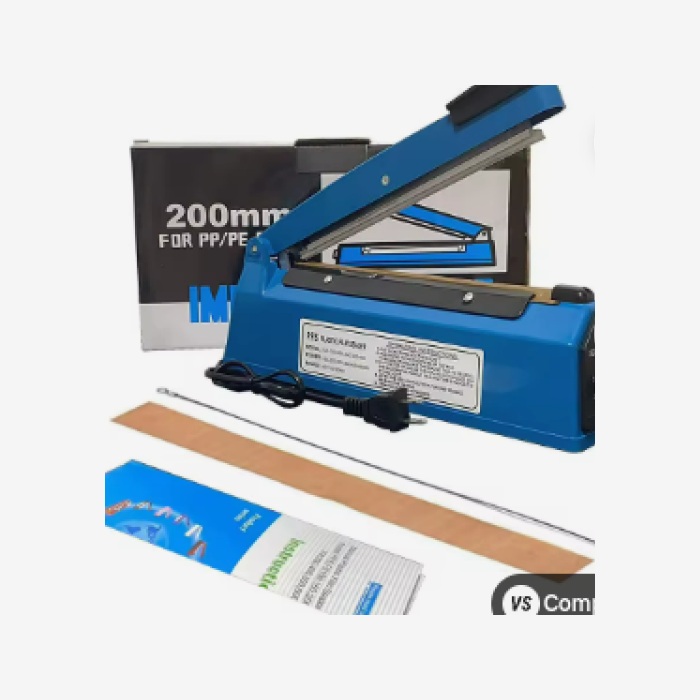
8 inch impulse sealer, 50 bags a minute
The tool side of the heat seal question: a 200 mm impulse sealer rated at 50 bags a minute, with spare sealing strips.
- Role: Alibaba sourcing candidate
- 200 mm bar
- 50 bags/min
- Spare strips
- MOQ: From 1 unit
A bench test for your cookies
-
Buy samples of two or three bags: one OPP self-seal, one OPP heat-seal if you own a sealer, and one cellulose bag.
-
Pack the same cookie in each, seal as the bag intends, and keep one unpackaged cookie as a control on the same shelf.
-
Check at day 1, 3 and 7 for crispness, smell, icing smear or colour bleed, and fogging inside the bag.
-
Press and shake each bag; note any seal that lets go or any film that splits at the corner.
-
If you use food-colour printing or icing, test those cookies separately, because that is where the sources report trouble [1].
-
Record the bag, film, thickness, seal and result per day. That table is your specification, and the packing day you can repeat.
Nothing here was run this test. It is a way to settle the disagreement between the sources with your own cookies, and seven days is a guess at a useful window, not a rule from any source.
Questions to ask the supplier
-
What is the film: OPP, BOPP, CPP, PE or cellulose?
-
What is the thickness, and is it stated with or without the flap?
-
Is the size quoted for the pocket, excluding the flap?
-
If sold as compostable, does the certificate cover the finished bag, and with what print or label?
-
Is the film food-contact approved, and for what food types, including greasy or moist products?
-
Does the bag carry a suffocation warning? Some larger plastic bags do, for example a 6 by 9 inch listing that mentions it [10]. Nothing here was research the rules.
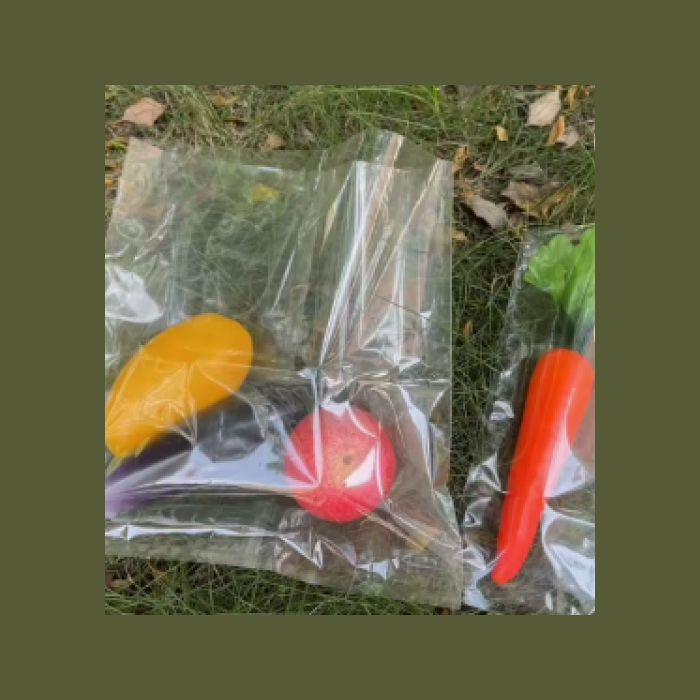
Home-compostable cellulose bags
The compostable end of the range: a transparent cellulose bag listed as home-compostable, made to order with custom size and thickness.
- Role: Alibaba sourcing candidate
- Cellulose film
- Home-compostable
- Custom size
- MOQ: From 10,000 pieces
Common mistakes
-
Assuming “cello” means cellulose. Many cheap cello bags are polypropylene [2].
-
Using a self-seal bag for wet icing. Trapped moisture can smear the surface [1].
-
Reading size without the flap. Check whether the flap is excluded [4].
-
Claiming compostable on a finished bag. The film certificate may not cover the bag [9].
-
Buying a sealer before checking the bag grade. Heat-seal and non-heat-seal films both exist [7].
FAQ
Are cello bags the same as cellophane bags?
Not always. Some suppliers sell BOPP plastic under the cello name [2], and some sell true cellulose film [8].
How thick should a cookie bag be?
Listings run from 1.2 to 2 mil [3][4][6][8]. The sources reviewed show no source that says a particular thickness suits cookies; test your own.
Are cellulose bags compostable at home?
Futamura says its film is certified for home and industrial composting [7], but one retailer notes its finished bags are not themselves certified [9].
Can I heat-seal cello bags?
Back-weld OPP bags and some cellulose bags can be [6][8][9]. Check the specific listing.
References
- Miss Cookie Packaging, The Great Debate: Poly Bags vs. Cello Bags for Cookie Packaging. misscookiepackaging.com (bakery supply blog).
- Koch, Cello bags FAQ (search snippet: the cello is BOPP polypropylene; page text not fully retrieved). koch.com.au (packaging supplier).
- 888 Display USA listings: 8 x 10 in 1.4 mil, 4 x 6 in 1.6 mil, 200 pack $10.92, 8 x 10 in 100 pack $9.78. walmart.com (marketplace listings; prices as displayed).
- Marketplace listings: 6 x 9 in resealable cellophane bags, 2 mil, size excludes glue flap, 200 units; 2 x 3 in bags listed at 1.4 mil. walmart.com (marketplace listings).
- Plymor, resealable 1.25 mil polypropylene cookie or candy bag (what a mil is). walmart.com (marketplace listing).
- Interplas, 8 x 10 back weld cello bags 1.2 mil, and cellophane heat sealer page. interplas.com (plastic bag supplier).
- Futamura, NatureFlex compostable films, applications and FAQ. futamuragroup.com (film maker).
- Nashville Wraps, compostable NatureFlex cellophane bags, 1.2 mil and 1.6 mil. nashvillewraps.com (retailer).
- Good Start Packaging, Cellophane bags FAQ. goodstartpackaging.com (retailer).
- iMailer listings: 3 x 11 in pretzel bags 1.4 mil, 1,000 count; 6 x 9 in 1.6 mil with suffocation warning. walmart.com (marketplace listings).
- Zoro, Nashville Wraps compostable cellophane bags 3.5 x 5.5 in and 7 x 15 in, 100 packs ($19.49 and $46.15 as displayed). zoro.com (retailer, prices as displayed).
Continue reading
Stand-Up Pouches: Fill Weight, Gusset and Usable Height
A pouch is listed by three numbers and none of them is the fill volume. Width, height and gusset describe a flat sheet of film, not the space left after the seal.
Spice Shaker Caps: Hole Size, Fit and Product Match
A shaker cap is three parts that are usually sold separately: the base, the rotating or flapping lid, and the liner. Buy them apart and the hole size is the last thing you check.
Metal Balm Tins: Fill Weight, Lid Type and Label Area
The ounce stamped on a balm tin is a trade size, not a fill weight. A 1 oz tin holds about 28 g of wax, and a little less of anything with oil in it.