Shrink Bands for Mason Jars: Regular vs Wide Mouth, and Which Size to Test
Regular-mouth lids are about 70 mm and wide-mouth lids about 86 mm. A band sized for one cannot go on the other, and here is the arithmetic, the published sizes, and the six-jar test that settles it.
 Lena Schmidt
In this guide
- Two lid sizes, and a lid for one does not fit the other
- What suppliers pair with mason jars
- Why a 115 mm band cannot go on a wide-mouth jar
- Measure the ring, not the listing
- Will the band hold on a jar with no neck?
- What a band does and does not do on a canning jar
- Heat: the reviewers’ hair dryer reports
- A six-jar trial
- What the bands cost
- Questions to ask a supplier
- Lids, labels and the look of a gift jar
- Moisture, powders and the ring
- Where to buy the two sizes
- Mistakes that waste bands on mason jars
- Reordering without surprises
- FAQ
- References
Quick answer. Regular-mouth mason jars use a lid of about 70 mm and wide-mouth jars about 86 mm, according to retail lid listings, and a lid for one does not fit the other. A band lying flat at 115 mm opens to a 230 mm tube, enough for a roughly 70 mm lid with about 5 percent to spare but too small for an 86 mm one, which needs at least 135 mm. A 153 mm band covers the wide size with about 13 percent spare. Retail listings measure different things, so measure the ring on your own jar, and test whether the band grips the glass below the ring, because a jar without a neck bead can let the film slide off.
Two lid sizes, and a lid for one does not fit the other
Mason jars come in two common openings. Retail listings for replacement lids describe the regular mouth as 70 mm and the wide mouth as about 86 or 87 mm. Ball’s own answer on a retailer page is blunt: regular-mouth lids and bands fit any regular-mouth jar and will not fit wide-mouth jars. The same is true in reverse, so a band sized for one opening will not suit the other.
That makes mason jars a good case for the halving arithmetic used in this guide. The jar size in ounces tells you almost nothing, because a 4 oz and a 16 oz regular-mouth jar share a lid. What matters is which opening you have. If you sell both, you need two band sizes, not one.
What suppliers pair with mason jars
Four listings that name mason jars. The table adds the minimum lay-flat width from the halving rule (pi times diameter, divided by two) and the slack that results. Where a listing gives a cap diameter, that figure is used; where the size comes from a separate retail listing for the lid, the text says so.
| Band (supplier) | Stated fit | Min. lay-flat | Spare | Unshrunk dia. |
|---|---|---|---|---|
| 115 x 28 mm (Supplement and Supply) | Cap diameter 2 3/4 in (69.9 mm); regular-mouth mason jars | 110 mm | 4.8% | 73 mm |
| 120 x 27 mm (Specialty Bottle) | 70 mm lid, 8 oz mason candle jar | 110 mm | 9.1% | 76 mm |
| 50-pack (Supplement and Supply) | Lids 2 1/2 to 2 3/4 in (63.5 to 69.9 mm); 4 oz and 8 oz regular-mouth | 100 to 110 mm | Width not seen | Not seen |
| 153 x 28 mm (Supplement and Supply) | Canisters and wide-mouth mason jars; 86 mm lid assumed | 135 mm | 13.2% | 97 mm |
Minimum lay-flat, spare width and unshrunk diameter are calculated from the lay-flat figures. The 86 mm figure for the last row comes from retail lid listings, not from the band listing.
The two regular-mouth bands, 115 and 120 mm wide, sit at 5 to 9 percent slack, a little tighter than the 10 to 15 percent some bottle pairings leave. The wide-mouth band is 153 mm. The listings describe PVC film at 2 mil thickness for the Supplement and Supply bands. Reviewers say the narrower bands fit regular mason lids well. One reviewer of the wide band calls it a little snug on an 8 oz jar, and the review does not say which mouth size that jar had, so nothing is read into it.
Why a 115 mm band cannot go on a wide-mouth jar
This is the mistake the arithmetic prevents. A 115 mm band lying flat opens to a tube with a circumference of 230 mm. An 86 mm lid has a circumference of about 270 mm. The band is too short by about 40 mm and will not slide over the lid, however much heat you plan to apply. The 153 mm band opens to 306 mm, which clears the wide lid with room to spare.
The reverse also fails, though more quietly. A 153 mm band on a 70 mm lid has an unshrunk diameter of 97 mm against a lid of 70, so the film must shrink a long way and may wrinkle or fold over. It may be fine for a trial, but if you have a choice, use the width that matches the jar.
Measure the ring, not the listing
The 70 and 86 mm figures describe the opening of the jar or the diameter of the lid, depending on who writes the listing. One retailer page says its wide lid fits jars of 3.38 inch (86 mm) outer diameter, another lists a lid as 86 mm and a ring as 87 mm. A two-piece closure also has a ring that sits proud of the flat lid, so the widest point you must cover is the ring, not the lid beneath it.
Wrap a paper strip round the widest part of the closed jar, mark the overlap and measure it. Divide by two for the smallest lay-flat width that can go on. A 70 mm lid gives about 110 mm, an 86 mm one about 135 mm. Add some slack; the pairings above suggest 5 to 13 percent as a working range for this jar type. Then check the result against the listing before you order.
Will the band hold on a jar with no neck?
Uline’s instruction sheet carries a note that bands must grip both the cap and the neck to be tamper evident, and has a separate section headed jars without necks, with a sizing tool that wraps round the container. Aaron Packaging explains that containers designed for bands often have a molded satellite ring that acts as an anchor, and that the band should fully enclose it. A trade article on shrink bands adds that if the container or lid has no lip, the band might slip off, and that a full sleeve covering the container is usually more effective than a band covering only the top.
A mason jar has a threaded finish and a ring, but nothing reviewed says whether the glass below the ring offers a reliable grip. Some reviewers say the bands hold well, so it clearly works for some jars. For your jar, hold it by the base after shrinking and try to push the band upward with a fingernail. If it slides, try a taller band that shrinks onto more of the glass, or accept that this jar is a poor candidate.
What a band does and does not do on a canning jar
This guide is about dry mixes, spices, grains and other goods in mason jars. It does not cover home-canned food. For canned goods, the lid seal is what keeps the food safe, and the customer judges it by the lid itself. A band adds visible tamper evidence but does not replace the seal, and this guide does not cover canning guidance, so follow the rules for your product and your state before you sell anything canned or preserved. For jam, salsa and other lug-lid jars, see our guide on safety-button lids.
For dry goods, the band serves two purposes. It tells a buyer the jar has not been opened, and it stops the ring from turning in a box or tote. The second purpose matters more than people expect for gift jars with layered mixes, where a ring that has worked loose can leave a layer spilled.
Heat: the reviewers’ hair dryer reports
The reviews on the Supplement and Supply bands are a mixed set. One buyer says the band needs only a small amount of heat from a blow dryer. Another used a cheap hair dryer successfully on a different size. A buyer of the wide band says a blow dryer worked, and another used a heat embossing tool. Against that, a listing for a different, larger band says a hair dryer barely works, and Uline’s sheet names a heat gun. As the troubleshooting guide says, sellers disagree, and the answer depends on the film.
For dry goods the heat risk to the contents is small, but glass is a concern. A jar that is cold from a cool store, or one with a hot filling, can behave differently under heat, and no source reviewed gives a safe temperature for the glass. Keep the heat moving and check the jar afterwards.
A six-jar trial
Buy a small pack of the narrow and the wide band even if you sell only one jar size, so you have a comparison. Take six filled jars with your real lids. Band two with the narrow size, two with the wide, and two with a size one step up. Use the same heat and distance for all.
Check each jar for flat film, a tight fit on the ring, a band that stays put when pushed upward, and a perforation that tears straight. Then ship one banded jar to yourself in your usual packaging. A tote bag or a cardboard box is a harsher test than a shelf.
What the bands cost
Specialty Bottle lists a 120 x 27 mm band at 10.85 dollars for 250, about 4.3 cents each. No stated price was found for the Supplement and Supply 115 x 28 or 153 x 28 mm bands in the excerpts reviewed, so none is quoted here. Retail marketplace prices change often, and a pack of 250 or 500 will differ from a factory quote.
The comparison that matters is not the band against nothing but the band against a lid sticker. A sticker over the ring is cheaper to apply, but it can be peeled and replaced. Our comparison of bands and tamper stickers covers that.
Questions to ask a supplier
Ask for the lay-flat width and height in millimetres, the film and thickness, and whether the stated cap range refers to the lid or the ring. Ask which jar the band was tested on, and for a sample. And ask whether the film suits a heat gun, because reviewers split on hair dryers.
Lids, labels and the look of a gift jar
Mason jars are often sold as gifts, so the lid carries a tag, a fabric topper or a label, and the band has to coexist with them. A band shrunk over the ring leaves the flat centre of the lid visible, which is where a round sticker or a printed disc normally goes. If you plan a fabric topper held by twine, put the band on first, then the topper, so the film is not hidden or pulled out of shape.
Think about the order of work before you start a batch. Fill the jar, wipe the thread and rim so no powder is trapped under the ring, close it, band it, then add the label or tag. Doing the steps out of order is the quickest way to end up with a band that has to be cut off and replaced. That is reasoning from how the parts stack, not a supplier rule, so adjust it to your own jar.
Moisture, powders and the ring
Dry mixes shed fine dust. A trace of cocoa or flour left on the thread or under the ring can make the closure harder to seat and, once banded, you cannot easily correct it. Brush the rim clean and check that the ring turns freely before the band goes on. If the contents are sensitive to humidity, a band is not a moisture barrier, and nothing in the sources reviewed says it is. Treat it as evidence of opening, not as protection for the food.
Where to buy the two sizes
The six-jar trial compares a narrow band with a wide one, so the two listings below are the two ends of that comparison: a mixed sample pack for range, and the 115 mm band sold specifically for regular-mouth jars.
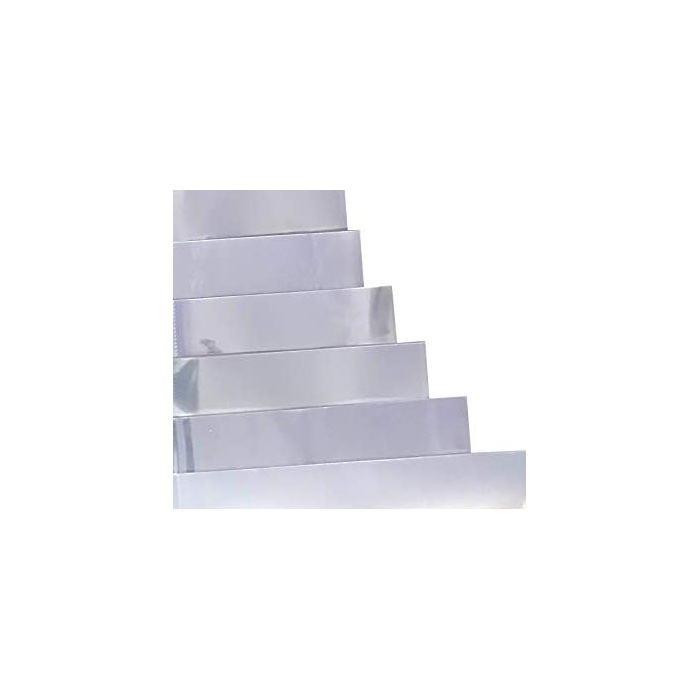
Shrink band assorted sample pack, large
The large-size sample pack, for jars and wide containers.
- Role: Amazon consumer option
- Assorted sizes
- Large diameters
- Sample pack
- MOQ: Check current listing
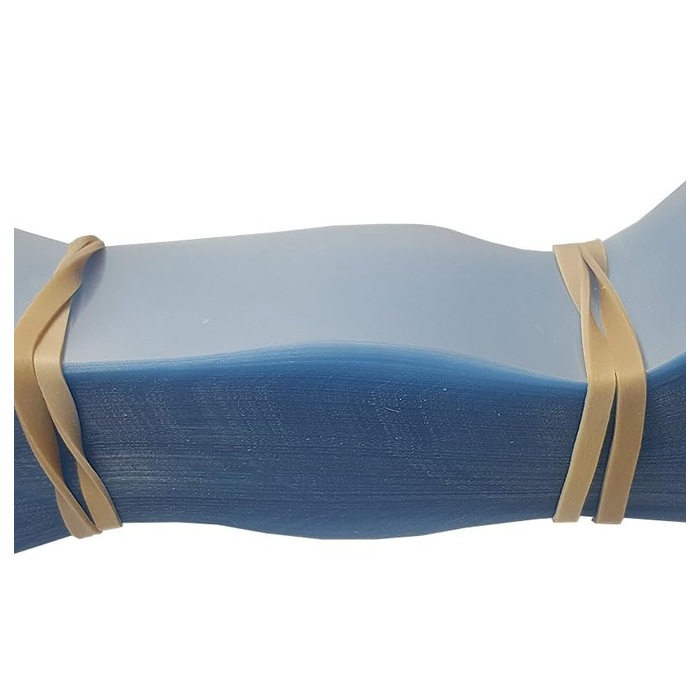
115 x 28 mm clear perforated band, 100 pack
A 115 mm band stated for a lid diameter of 2 3/4 inches, which is the regular-mouth figure this guide uses.
- Role: Amazon consumer option
- 115 x 28 mm
- Perforated
- 100 pack
- MOQ: Check current listing
Mistakes that waste bands on mason jars
The most common error is buying by jar capacity. A 4 oz and a 16 oz regular-mouth jar share a 70 mm lid, and a 4 oz and a 16 oz wide-mouth jar share an 86 mm one, so the ounces mislead. The second is copying a band size from a candle or cosmetic jar listing because the lid looks the same, without checking whether the listing refers to the ring or the lid. The third is skipping the push-up test and shipping jars whose bands can slide up over the ring. The fourth is ordering a case before the six-jar trial.
A quieter mistake is mixing jar brands inside one batch. Rings from different makers can differ by a millimetre or two, and a band that fits one brand snugly may be loose on another. Keep one jar brand and one ring type per band size, and write both on the box of bands.
Reordering without surprises
Once a size works, record it: jar brand, ring type, band width and height, film, supplier, heat tool, distance and time. Keep one finished jar from the batch as a reference. When you reorder bands, compare the new lot against that jar before you open the case, since film thickness and shrink behaviour can vary between production runs. When you switch jar brands, treat the band as untested again, even if the lid is nominally the same size.
FAQ
What size shrink band fits a regular-mouth mason jar?
Suppliers list 115 mm and 120 mm wide bands, 27 or 28 mm tall, for lids of about 70 mm. Measure your own ring first.
Does the same band fit a wide-mouth jar?
No. A 115 mm band opens to about 230 mm, while an 86 mm lid needs about 270 mm.
Will a band stop the ring turning?
Only if it grips the glass below the ring. Test by pushing the band upward after shrinking.
Can I use a hair dryer?
Some reviewers say yes for these bands, others say no for different films. Test your film.
References
Continue reading
Shrink Bands for Deli Containers: Sizes and Preform Bands
One band size covers the common round tubs from 8 to 32 oz. The catch is that sellers describe that one size three different ways, so you cannot compare listings until you convert them.

Lift-Tab vs Ring-Peel Induction Seal Liners: How to Specify an Easy-Open Foil Seal
A practical buyer guide for choosing lift-tab, pull-tab and ring-peel induction liners without weakening the seal, confusing opening behavior, or paying for a feature the package does not need.

Pressure-Sensitive Liner vs Induction Seal Liner: Which Should You Use?
A practical comparison for buyers deciding whether a cap-applied adhesive liner is enough, or whether the package needs a true induction-sealed foil membrane and a controlled sealing process.