Shrink Bands for Body Butter and Cosmetic Jars: Sizes for 58, 70 and 89 mm Lids
An 8 oz cosmetic jar can arrive with a 58, 70 or 89 mm lid, and the band follows the lid rather than the volume. Here are the pairings sellers publish, why a wide range fails a small jar, and how much heat the product inside will tolerate.
 Lena Schmidt
In this guide
- Why “8 oz” does not tell you the lid
- What sellers pair with each lid
- A range that is too broad fails the small jar
- Height: lid seam, or the whole lid
- Grip on a straight-sided jar
- Heat and the product inside
- Do cosmetics need a tamper-evident seal?
- What a band costs against the jar
- Label panels and where the band sits
- A twelve-jar trial
- When a seal under the lid is the better choice
- Common mistakes with cosmetic jar bands
- Where to source these bands
- FAQ
- References
Quick answer. Match the band to the lid, not the jar volume. In the listings reviewed here, 2 oz and 4 oz jars use 58/400 lids and are paired with bands of about 100 mm lay-flat width, 8 oz heavy-wall jars use 89/400 lids paired with 165 mm bands, and an 8 oz straight-sided PET jar can use a 70/400 lid, where a 115 mm band is rated for lids of 2 1/2 to 2 3/4 inches. For a 58 mm lid a 100 mm band leaves about 10 percent spare width by the lay-flat arithmetic. Pick the narrowest band that clears your measured lid, because one buyer found a broad-range band too loose on a 2 inch jar.
Why “8 oz” does not tell you the lid
Cosmetic jars are wide and low, and the same volume comes with different openings depending on the maker. Uline sells an 8 oz double-wall dome jar with a 3 1/4 inch opening and an 89/400 lid, and an 8 oz clear PET straight-sided jar with a 2 1/4 inch opening and a 70/400 lid. Container and Packaging lists an 8 oz clear glass paragon jar with a 58-400 neck finish, which is 2.39 inches in diameter and 4.28 inches tall. Specialty Bottle lists an 8 oz PET heavy-wall jar with an 89/400 lid, 3.75 inches wide and 2.1 inches tall.
| 8 oz jar | Lid finish | Shape | Seller |
|---|---|---|---|
| Heavy-wall PET jar | 89/400 | 3.75 in wide, 2.1 in tall | Specialty Bottle |
| Double-wall dome jar | 89/400 | 3 1/4 in opening | Uline |
| Clear PET straight-sided jar | 70/400 | 2 1/4 in opening | Uline |
| Glass paragon jar | 58-400 | 2.39 in dia., 4.28 in tall | Container and Packaging |
Four jars, all called 8 oz, take three lid sizes, from 58 mm to 89 mm. A band that suits one of them will not suit the others, and a seller who says “bands for 8 oz jars” is guessing unless the listing names a lid. This is the main trap in the category, and it is why the rest of this page works from the lid.
What sellers pair with each lid
Specialty Bottle matches its 2 oz PET jars with 58/400 lids, and its 4 oz PET round jar with a 58/400 lid, to a band coded SB100x55, which reads as 100 x 55 mm, sold in 250-packs at $10.85. It matches its 8 oz heavy-wall PET jars with 89/400 lids to SB165x75, read as 165 x 75 mm, at the same $10.85 per 250. Cary Company lists a 100 x 25 mm clear perforated band for 58 mm, 58-400 standard caps.
For wider mid-size lids, a bulk-pack listing offers a 115 x 28 mm clear perforated band for caps of 2 1/2 to 2 3/4 inches, which its description says are common on cosmetic, plastic and regular-mouth mason jars. Wholesale Supplies Plus sells 115 x 55 mm and 155 x 55 mm bands, and says all of its bands are 2 mil.
| Band (lay-flat) | Opens to (2W/π) | Lid it is paired with | Minimum width (πD/2) | Spare width |
|---|---|---|---|---|
| 100 mm | 63.7 mm | 58 mm (58/400) | 91.1 mm | about 10% |
| 115 mm | 73.2 mm | 2 3/4 in (69.9 mm), seller’s upper limit | 109.8 mm | about 5% |
| 155 mm | 98.7 mm | 89 mm (89/400) | 139.8 mm | about 11% |
| 165 mm | 105.0 mm | 89 mm (89/400) | 139.8 mm | about 18% |
Calculated from the lay-flat figures. The lid diameters used are the finish numbers or the sellers’ stated limits, not measured cap widths; a real cap with ribs or a skirt is wider than its thread.
Treat the table as an order of magnitude. A 58/400 label describes the thread, and the cap on top is wider; the 100 mm band paired with it leaves roughly ten percent only if the cap is close to 58 mm wide. The Specialty Bottle pairing of 165 mm for an 89/400 lid leaves much more room, about 18 percent against the finish number, which suggests that seller chose a loose fit for a wide, ribbed lid or for a band that wraps over the top. I could not tell which from the listing.
A range that is too broad fails the small jar
Two reviews make the risk concrete. A buyer of the 115 x 28 mm band wrote that their jars are 1 oz and about 2 inches across, that the band was too big, and that with a little force they were still able to open the jar. On the Wholesale Supplies Plus page, another buyer said they spoke to the seller about size, were told a band would work, and found it did not fit their 2 inch jars; the seller’s own range is quite broad.
The same listings also carry plenty of satisfied comments, such as buyers saying the 115 mm band suits their 8 oz body butter jars and the 115 x 55 mm band fits a 4 oz heavy-wall jar and a tall 8 oz basic jar. Those are single reviews, but the pattern is clear enough: a band rated for several jar sizes works for the ones near the middle of its range and can be loose at the bottom. Buy for your lid, not for the range.
Height: lid seam, or the whole lid
The matched bands are 25, 28, 55 and 75 mm tall. A 25 or 28 mm band covers the lid skirt and the seam between lid and jar, which is the tamper-evidence job. A 55 or 75 mm band is taller than the jar’s lid skirt by a wide margin, and Specialty Bottle’s 2 oz jar is only 1.4 inches high. No source was found that says whether those taller bands are meant to overhang and shrink over the lid’s top, as another supplier describes for dropper bottles, or to wrap part of the jar body.
A Wholesale Supplies Plus reviewer says they use 55 mm bands mostly to protect paper labels, and that on a 12 oz jar the band fits the body only. That is a different job from tamper evidence. If you want a band to protect a kraft-paper label, a tall band that covers the label does that; if you want a lid seal, a short one is enough and uses less film. Decide which job you are doing, then ask the seller which one the product is designed for.
Grip on a straight-sided jar
Container and Packaging describes its paragon jar as having straight sides and square shoulders and base, and the Cary Company polystyrene jar as straight-sided too. A band holds because it shrinks under a lip or bead at the neck. TricorBraun’s band pages warn that the bottle must have a neck bead to hold the band in place. A straight-sided jar can offer less to catch than a bottle with a pronounced neck ring.
No source was found that measures the lip on specific cosmetic jars, so check by testing. Shrink a band onto one finished jar, let it cool, and try to slide it up and off. Then try to unscrew the lid with the band on. A band that lets the lid turn freely is decoration, as the 1 oz jar buyer found.
Heat and the product inside
Body butter, balms and waxes soften with warmth, and a heat gun is the usual way to shrink a band. The listings I read say to use a heat gun or a heat tunnel. No source was found on what a heat gun does to the contents of a cosmetic jar, so this is reasoning and not sourced advice: shrink the band on a filled and cooled jar, keep the gun moving, and look for any softening or oil sweating on the surface after the jar has rested. If you see it, shrink the bands on a tray of jars before filling and test the lid seal again, or use a warm-air tool at a distance.
Some makers report that bands need practice. One buyer of the 115 x 28 mm band said it is easy to shrink but takes a bit of practice to get right, and another said they did a test run because the band looked too big and it shrank perfectly. Plan a short practice batch on empty jars before the first filled run.
Do cosmetics need a tamper-evident seal?
Not as a general rule in the United States. FDA’s tamper-resistant packaging rule for cosmetics, 21 CFR 700.25, applies to liquid oral hygiene products and vaginal products, as the text reads. No source extends it to body butter, balms or scrubs. This is not legal advice, rules differ by market, and retailers or marketplaces may set their own requirements, so a band is often a trust signal rather than a legal need. Re-check the rule for your product and country before you rely on this page.
What a band costs against the jar
Specialty Bottle’s 250-pack at $10.85 works out to about 4.3 cents per band. Its 2 oz PET jar is listed at $0.82 and its 8 oz heavy-wall jar at $1.31, so a band adds roughly 5 percent to a 2 oz jar and about 3 percent to an 8 oz one. Uline’s bulk jar prices in the listings above run from about 30 cents to over a dollar. These are retailer prices from search results, not quotes.
The cost model from the earlier cost article still applies: band price divided by one minus the scrap rate, plus labour. At 4.3 cents and a 10 percent scrap rate while you learn the heat step, a band is about 4.8 cents before labour. The saving worth chasing is not a cheaper band but fewer failed ones.
Label panels and where the band sits
Wide, low jars have little vertical label space, and the lid sits close to it. Cary Company lists its 4 oz polystyrene jar with a label panel of 7.09 by 1.75 inches for a full wrap, and Specialty Bottle’s 2 oz jar is only 1.4 inches tall. A band that runs down the jar side by an inch can cover the top edge of a label or meet it. Hold a labelled jar with a band applied and read every line you are required to show before you order a case.
If the label wraps the full jar, a short band that stays on the lid skirt is safer than a tall one. If your design relies on a printed lid, a clear band keeps it visible, while a coloured band hides it. Decide this on a physical sample, since a screen mock-up will not show how the film reflects light on a curved lid.
A twelve-jar trial
Take twelve filled jars from your normal run, with the lids you will ship. Measure the widest point of three lids with a caliper and write the numbers down. Band six jars with the narrowest band that clears the largest lid, and six with the next size up, using the heat method you plan to use at volume.
Then check four things on every jar: the band is flat and tight, it cannot slide off, the lid cannot turn inside it, and the perforation tears cleanly with a thumbnail. Look at the contents too, as discussed above. Keep the winning band size, supplier, lid measurement and heat method in a one-line record, so a reorder or a change of lid supplier does not start from zero.
When a seal under the lid is the better choice
A band is the cheapest way to show a lid has not been opened, but it is not the only one. A foil or induction liner sits under the lid and cannot be seen from outside, and a sticker seal across the lid edge is another route. Our comparison of bands and stickers covers the trade-offs. For a cosmetic jar sold direct to customers, the band is usually enough, and the cost figures above show why: it adds a few cents to a jar that costs close to a dollar.
Common mistakes with cosmetic jar bands
The first is ordering by volume. The table shows four 8 oz jars on three lid sizes. The second is trusting a broad range. A band listed for 2 1/2 to 2 3/4 inch caps will suit a 2 3/4 inch cap and be loose on the smaller end. The third is ignoring the lid style: a smooth lid, a ribbed lid and a dome lid are different widths on the same finish.
The fourth is applying a band to a greasy lid. Body butters and balms leave a film on the cap during filling, and the film makes the shrink uneven. Wipe the lid and the jar neck before banding. The fifth is skipping the pull test, which takes a minute and tells you whether the band holds. Our perforation guide covers how to choose a tear design once the fit is right.
Where to source these bands
These three listings follow the lid sizes in the order the guide covers them: 58 mm, the 63 to 70 mm middle, and the 89 mm wide end.
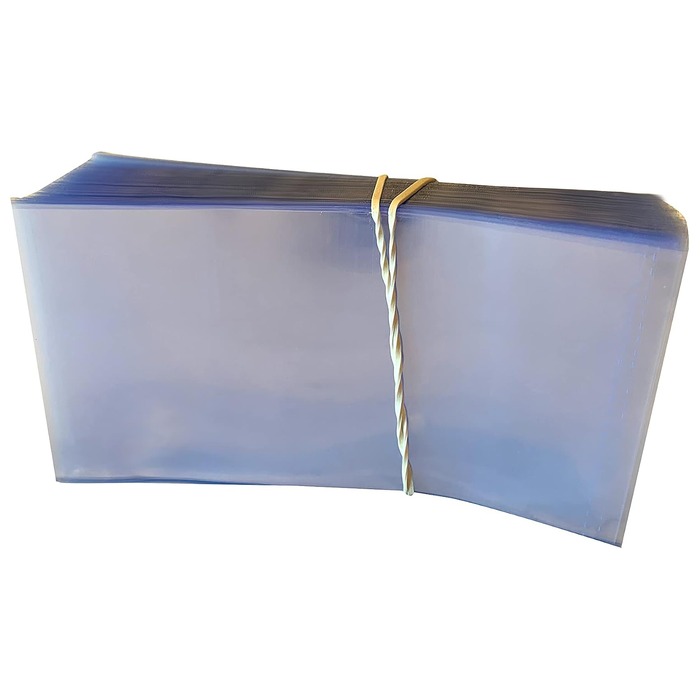
100 x 40 mm perforated band for 58 mm lids
The narrow end of the range, sized for the 58/400 lids that 2 oz and 4 oz cosmetic jars use.
- Role: Amazon consumer option
- 100 x 40 mm
- Perforated
- For 58 mm lids
- MOQ: Check current listing
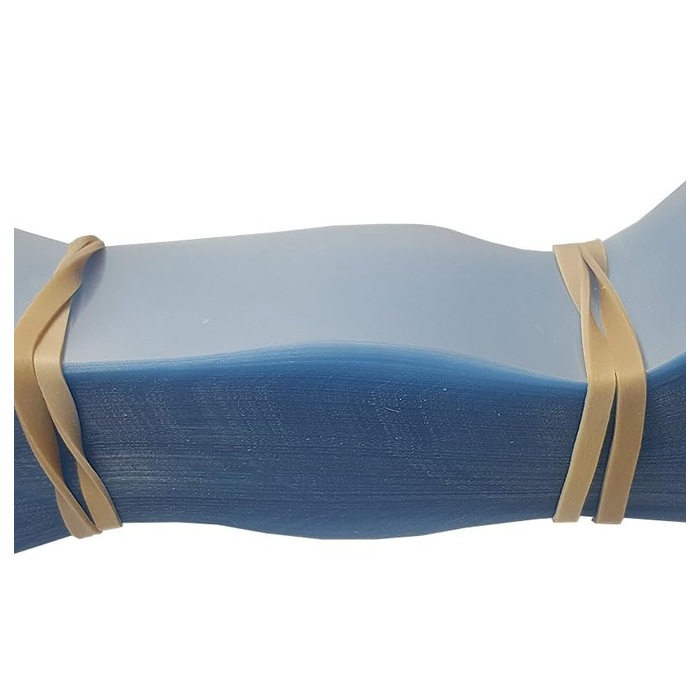
115 x 28 mm perforated band for wide jar lids
A 115 mm band rated for lids in the 2 1/2 to 2 3/4 inch range, which is where most 8 oz body butter jars sit.
- Role: Amazon consumer option
- 115 x 28 mm
- Perforated
- For 63 to 70 mm lids
- MOQ: Check current listing
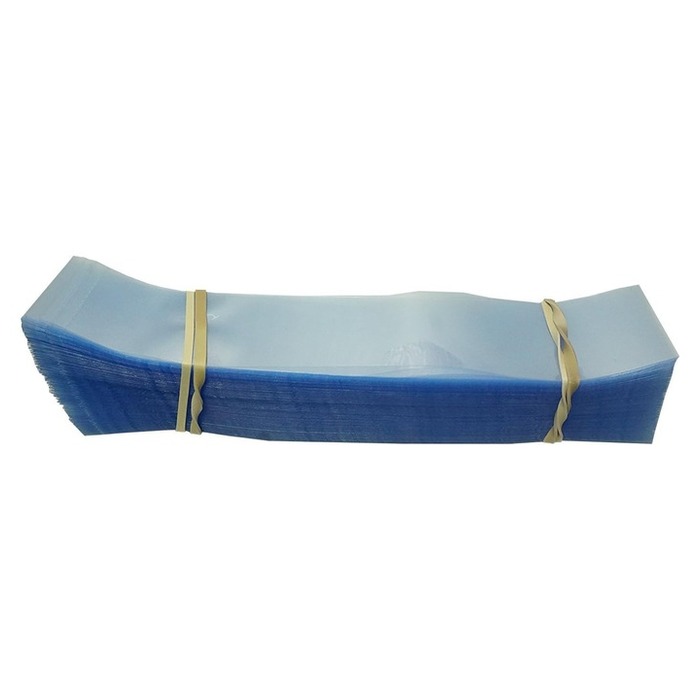
165 x 28 mm perforated band for 89 mm lids
The widest size in this set, for the 89 mm lids that some 8 oz straight-sided jars carry.
- Role: Amazon consumer option
- 165 x 28 mm
- Perforated
- For 89 mm lids
- MOQ: Check current listing
FAQ
What size shrink band fits an 8 oz body butter jar? It depends on the lid. Listings pair 165 mm bands with 89/400 lids and 115 mm bands with lids of 2 1/2 to 2 3/4 inches. Measure your lid.
What band fits a 2 oz or 4 oz cosmetic jar? Specialty Bottle pairs about 100 mm bands with its 58/400 jars, and Cary Company lists a 100 x 25 mm band for 58 mm caps.
Why is my band loose? The most likely cause in the reviews is a band rated for a wider range than your lid.
Do I need a tamper-evident band by law? Not as a general rule for body butter in the United States, as the FDA text reads, but check your product category and market.
Will the heat gun melt my product? No source was found. Test on a filled jar and look for softening.
References
- Specialty Bottle, “SB100X55 shrink band” and cosmetic jar listings Source
- The Cary Company, “Shrink Bands and Shrink Sleeves” Source
- Container & Packaging Supply, “70 mm x 50 mm clear PVC perforated shrink band” Source
- TricorBraun, “Shrink Bands for Bottles and Jars: A Sizing Guide” Source
- Berlin Packaging, “glass and plastic jars” Source
Continue reading
Shrink Bands for Handmade Soap and Bath Bombs: How to Size the Wrap
A soap band is an open-ended sleeve, so the sizing starts from the bar’s perimeter rather than from a cap diameter. Here is the halving rule, why cured bars measure differently from fresh ones, and how loose the published soap band sizes really are.
Shrink Bands for Candle Tins: Sizes for 8 oz and 16 oz Slip-Lid Tins
On a slip-lid tin the band bridges the lid and the body, so the maths starts from the tin’s diameter rather than a bottle cap. Here are the bands two suppliers pair with their own tins, the two-line check you can do yourself, and why their suggested bands are taller than the tin.
Shrink Band Problems and Fixes: Wrinkles, Holes, Loose Bands and Crooked Tears
A symptom-by-symptom guide for people shrinking bands by hand: what each fault looks like, which cause the supplier instructions actually name, and which fixes are reasoning rather than a sourced rule.