How to Specify Roll Labels for a Tabletop Bottle Labeler
A practical checklist for matching the label, roll, and machine before you approve a print run
 Lena Schmidt

In this guide
- Start with the Labeler, Not the Artwork File
- The Fields to Put on a Roll-Label Purchase Specification
- Measure the Label on the Real Bottle
- Choose the Sensor Feature with the Machine Supplier
- Keep Label Construction Separate from Roll Geometry
- Run a Short Acceptance Trial Before the Full Order
- Copy-and-Send RFQ Wording
- When a Quote Is Not Ready to Approve
- Alibaba Sourcing Paths
- References
Quick answer. A label can be the right size on the bottle and still fail in the machine. The label head also has to accept the finished web width, core, roll diameter, unwind direction, label gap or registration mark, and the label’s release behavior. Send the printer a paired label-and-machine specification, then test the production-intent roll on your exact tabletop applicator before approving the full order.
This guide covers pressure-sensitive labels supplied on a roll for small-batch bottle and jar labeling. It does not cover shrink sleeves, wraparound glue labels, thermal shipping labels, or automatic high-speed line design.
Start with the Labeler, Not the Artwork File
Find the exact machine model and its manual or supplier specification sheet. Record the label head’s usable web-width range, maximum roll outside diameter, core diameter and any adapter limits, sensor type, supported label pitch, and threading path. Also note whether the machine rewinds the liner and whether clear labels need a different sensor. Values differ by model; a common core size or roll diameter is not a safe substitute for the machine’s stated limit.
If the manual is missing, ask the machine supplier to mark the limits on a drawing or send a photo of the label path with dimensions. “For bottle labels” is not enough to establish compatibility.
The Fields to Put on a Roll-Label Purchase Specification
| Field | What to provide | Why the labeler needs it |
|---|---|---|
| Finished label size | Face width × height; for a wrap label, state the intended overlap or gap on the actual container. | Controls the printed panel and how far the label wraps. Do not derive the order size from bottle diameter alone. |
| Repeat / pitch | Distance from the leading edge of one die-cut label to the next; include the gap or notch used by the label sensor. | The sensor reads the repeat to stop the next label at the peel edge. The die-cut gap and registration feature must suit the sensor. |
| Web and liner width | Finished roll width edge-to-edge, including liner; state label width separately. | The roll holder and guides track the web, not just the face stock. |
| Core and roll diameter | Core inside diameter and maximum finished roll outside diameter. Confirm any adapter and the machine’s clearance. | A roll can be the correct web width but physically not fit the spindle or frame. |
| Unwind and presentation | Provide an unwind diagram or marked sample: labels face in/out, leading edge first, and roll orientation as loaded. | “Unwind direction” can be interpreted differently. A simple drawing avoids a reversed roll or wrong label orientation. |
| Face stock and finish | Paper, PP/BOPP, PET or other exact face material; coating/lamination; print method and any clear area. | Affects stiffness, sensor detection, scuffing, moisture resistance and whether the label releases cleanly at the peel edge. |
| Adhesive and application surface | Bottle material and finish, curved or tapered area, contents/condensation/oil exposure, application temperature and service conditions. | A water-resistant face does not guarantee that the adhesive will bond to a wet, oily, low-energy or curved bottle. |
| Quantity and packing | Labels per roll, rolls per order, sample quantity, carton protection and roll identification. | Supports trial planning, receiving checks and repeat ordering. |
Measure the Label on the Real Bottle
For a wraparound label, measure the usable cylindrical panel on the actual container. Mark a consistent vertical datum, measure the circumference at the label height, and identify whether the design should meet, leave a deliberate gap, or overlap. Bottle taper, shoulder, seam, grip texture and mold variation can make a nominal diameter misleading. Send a dimensioned drawing or a physical bottle, and ask the printer to confirm the finished cut size against it.
For a front panel or partial wrap, specify the face width and height plus the position of the leading edge from a repeatable bottle feature, such as a seam, molded mark or base datum. If the bottle rotates freely, explain what should control orientation. The label roll specification cannot correct an unstable bottle or an undefined placement datum.
Choose the Sensor Feature with the Machine Supplier
Most roll-fed labelers use a sensor to detect each label boundary. Ask whether the machine expects a visible gap, a notch, a black registration mark, or another feature, and where that feature must sit across the web. Clear-on-clear labels can be difficult for some optical sensors; a machine may need a compatible transparent-label sensor or a different registration solution. Do not assume the sensor can detect every face stock or print design.
Send a physical sample from the intended label material and print treatment. Confirm that the supplier can keep the gap or mark consistent through the roll and that the feature will not be covered by artwork, foil, varnish or a dark bottle surface in a way that interferes with detection.
Keep Label Construction Separate from Roll Geometry
Roll dimensions determine whether the stock can be mounted, tracked and dispensed. Face stock, coating and adhesive determine whether the label prints, survives handling and stays attached to the package. These are related decisions, but one does not prove the other. Research on pressure-sensitive adhesives for glass-bottle labels evaluates properties such as tack, peel resistance and shear behavior; performance depends on the adhesive formulation and test conditions, not just a “waterproof” product description. [1][2]
Tell the label converter what the bottle is made from and how it is handled after filling. Include condensation, refrigeration, oil or lotion contact, abrasion, cleaning and application temperature when relevant. Ask for a material and adhesive recommendation for that use, but approve it only after a sample trial on your own bottle. Do not infer food-contact suitability, chemical resistance or a regulatory claim from generic marketplace wording.
Run a Short Acceptance Trial Before the Full Order
Load the sample roll using the machine manual. Confirm that the core fits, the roll clears the frame, the web tracks without edge rub, and the liner follows the intended path.
Advance several labels slowly. Check whether the sensor finds every gap or mark and whether each label stops at a repeatable peel position. Watch for missed labels, double feeds, liner tears, adhesive ooze and labels lifting before the peel edge.
Apply labels to production-intent containers using the intended operator motion and settings. Check height, skew, wrap seam, bubbles, wrinkles, leading-edge placement and bottle rotation.
Repeat at the normal working pace and inspect the package after the handling or exposure that matters to you. Record the label-roll batch, machine settings, accepted units, rejects and the adjustment that fixed any fault.
Keep one approved bottle and one section of the accepted roll as the reference. Freeze the final artwork, die line, material, adhesive, roll direction, core and other machine limits on the purchase order.
If labels feed inconsistently, change one variable at a time. A sensor issue, incorrect unwind, web tracking problem, unstable bottle, release-liner behavior and adhesive performance can look similar at first. A controlled trial helps identify which part needs correction.
Copy-and-Send RFQ Wording
Please quote pressure-sensitive bottle labels supplied on rolls for our tabletop labeler. Machine model: [model]. Maximum web width: [value]. Core inside diameter: [value]. Maximum roll outside diameter: [value]. Label face size: [width × height]. Repeat/pitch: [value]. Gap or registration feature: [type and position]. Unwind direction and label orientation: [attach marked diagram]. Face stock/finish: [material]. Adhesive: [application conditions]. Bottle: [material, dimensions, surface and sample available]. Please confirm the finished roll dimensions, labels per roll, sample cost, minimum order, lead time, and whether you can run a sample on this exact machine and bottle before mass production.
When a Quote Is Not Ready to Approve
- The supplier confirms only the label face size but omits the web, core, finished roll diameter or unwind diagram.
- The listing calls the labels “machine compatible” without naming your machine model or sensor feature.
- The roll is specified for shrink-sleeve equipment or a thermal printer rather than a pressure-sensitive tabletop applicator.
- The supplier cannot provide a sample roll or refuses to test the actual bottle and machine setup.
- The quoted MOQ, sample option, artwork charge or roll format differs between the product page and the written quotation.
Alibaba Sourcing Paths
The listings below are supplier-specific examples for obtaining custom roll labels. Their visible listing details are seller-provided and should be reconfirmed in the quote. Listed in order of appearance; no ranking implied. Affiliate disclosure: Object Brief may earn a commission from qualifying purchases.
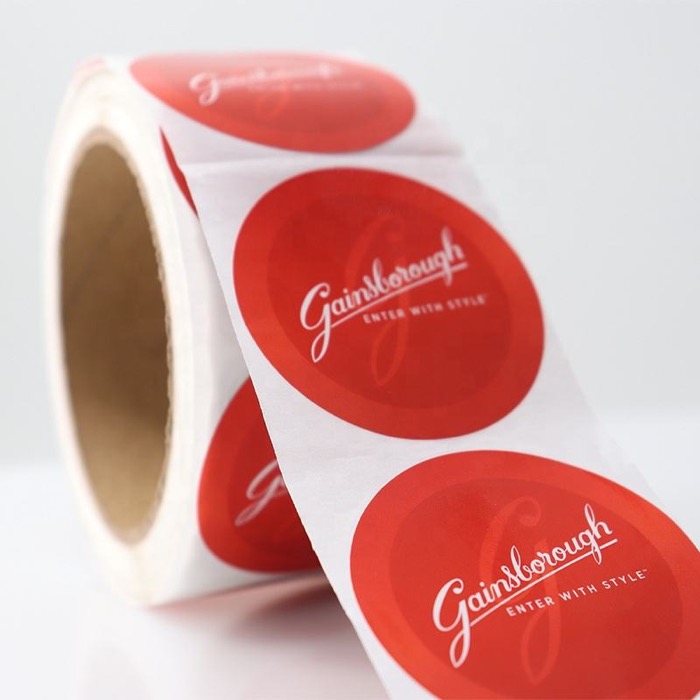
Custom Adhesive Label Maker (ZT Printing)
A custom label manufacturer on Alibaba offering adhesive labels in roll, sheet or die-cut form, with customizable size/material and a displayed MOQ…
- Role: Roll/Sheet/Die-Cut Custom Route
- Roll / sheet / die-cut options
- Displayed MOQ 500 pieces
- Confirm core, roll OD, web and unwind
- MOQ: ~500 pieces — check current listing

Zhongshan ZT Printing — Custom Label Supplier
The supplier storefront for the custom label maker behind the roll/sheet/die-cut route (8 years on the platform).
- Role: Supplier Store — ZT Printing
- Supplier storefront on Alibaba
- Custom label manufacturer
- 8 platform years
- MOQ: Check current listing
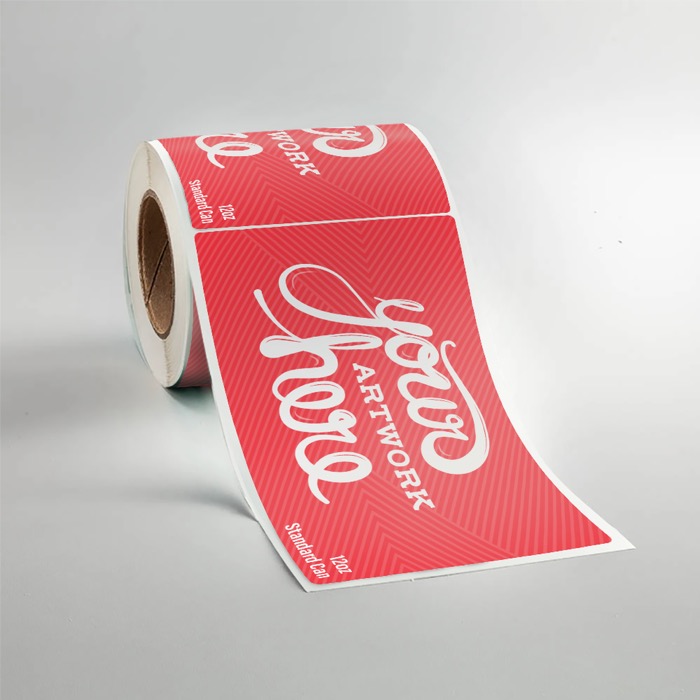
Bottle Label Stickers Printer (LG Printing)
A custom label manufacturer on Alibaba describing bottle labels in sheet or roll form with paper, vinyl, BOPP, PVC and PET options, displaying an MOQ…
- Role: Multi-Material Bottle Label Route
- Sheet / roll bottle labels
- Paper / vinyl / BOPP / PVC / PET
- Confirm order basis and roll details
- MOQ: ~1,000 pieces — check current listing
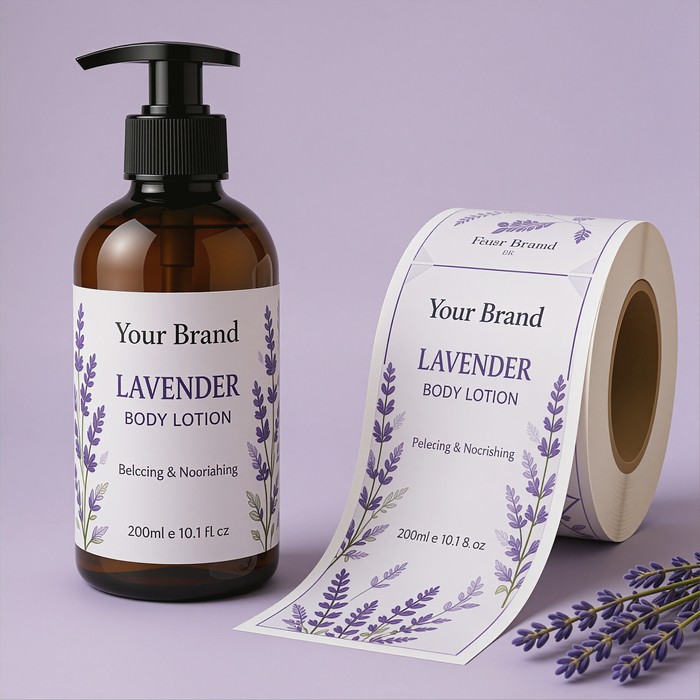
Guangzhou LG Printing — Custom Label Supplier
The supplier storefront for the custom label maker behind the sheet/roll multi-material route (6 years on the platform).
- Role: Supplier Store — LG Printing
- Supplier storefront on Alibaba
- Paper / vinyl / BOPP / PVC / PET
- 6 platform years
- MOQ: Check current listing
References
- Synthesis and Properties of Water-Based Acrylic Adhesives with a Variable Ratio of 2-Ethylhexyl Acrylate and n-Butyl Acrylate for Application in Glass Bottle Labels. Polymers, 2020. DOI: 10.3390/polym12020428
- Adhesive Performance of Acrylic Pressure-Sensitive Adhesives from Different Preparation Processes. Polymers, 2021. DOI: 10.3390/polym13162627
Continue reading
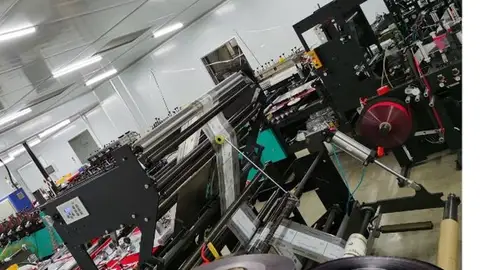
Custom Printed Shrink Bands: Artwork, Minimums & Proofing for Small Brands
Printing on the band buys a message, not tamper evidence. Decide whether you need it, then walk the approval chain from unprinted fit test to a shrunk sample on your own container.
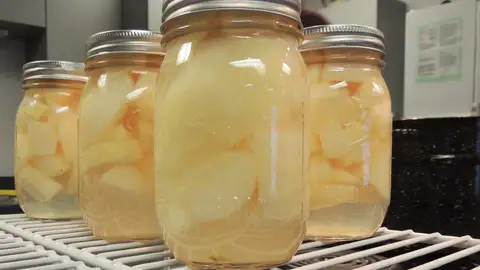
Shrink Bands for Mason Jars: Size, Fit & Tamper-Evident Setup
How to size a band for regular-mouth and wide-mouth Mason jars, decide whether it goes over the screw band, and test the setup before you buy in volume.

How to Choose a Small-Batch Bottle Rinser
Air, water, or manual: match the cleaning job to the bottle and the next process